

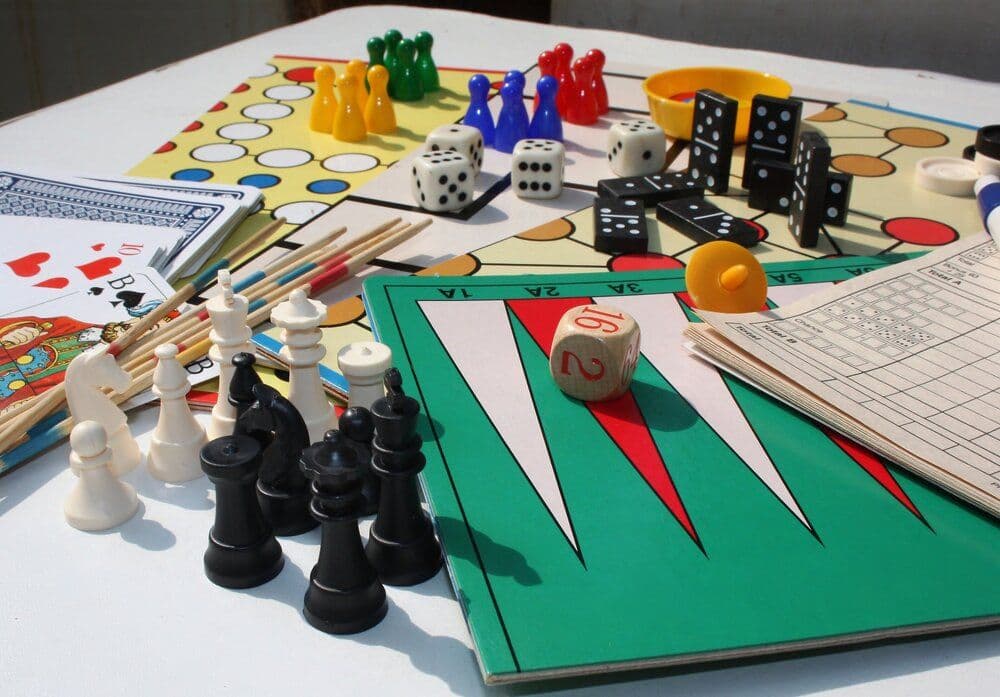
No matter how old we get, we never really lose our childlike love of fun and games – even as elderly people! Although when we get older we may not be as mobile as we used to be, there are still plenty of great games for old people to keep us entertained and challenge our brains.
In fact, not only do games help to keep our brains sharp, but they’re also good for our overall health and wellbeing; whether played alone or in a group.
So, to find out what our top 51 games for elderly people and seniors are, grab a piece of paper, a deck of cards and a few dice and prepare to play.
Spend time with a friendly carer in your home
Browse the best companionship care in your area.
Find an amazing game for elderly people to play:
- Puzzle games
- Board games
- Card games
- Dice games
- Word games
- Number games
- Memory games
- Social games
- Online games
- Video games
- Outdoor games
- Sporty games
The Benefits Of Playing Games For The Elderly
There are plenty of benefits when it comes to playing games; not just for the elderly, but for people in general. These benefits include:
- Preventing boredom
- Improve mental health
- Keeping the brain active
- Boost memory and concentration
- Nurturing imagination and creativity
- Relieving stress
- Encouraging socialising and bonding
- Improving mood and wellbeing
Even though some elderly people might have physical or cognitive challenges, most games can easily be modified to suit the person playing; from cards or board games with larger text to quick 5-10 minute games for those with a reduced attention span.
The variety of games that are now available is seemingly endless, which can make the choice difficult. To help you narrow down your choice, we’ve provided a few categories of senior citizen-friendly games, with a few examples to inspire you.
If you’re ready to have some fun and play games, read on to get stuck into all the different games available!
Puzzle Games
Playing just five minutes of puzzle games every day has been shown to boost your brain function. In fact, puzzle games can even help prevent cognitive decline and ward off dementia if played regularly.
1. Puzzles
The original puzzle game, jigsaw puzzles stimulate our mind and boost our visual-spatial skills, memory and logic. Even more interestingly, they have also been proven to reduce blood pressure and slow our heart rate, helping us to de-stress and relax. There are also puzzles that have been specially designed for people living with dementia.
2. Ubongo
Originally developed by a Swedish game designer, Ubungo is an abstract puzzle game that can be played by two to four players. In Ubongo, you’ll be competing against your fellow players to solve individual puzzles of interlocking geometric shapes as quickly as you can to grow your treasure of gems.
3. Cranium
A fun game that can be played in a group, Cranium involves a number of different puzzles, including acting, sculpting, drawing and music. Team up with other players to make your way around the board and complete the challenges. These challenges aren’t always straightforward, so watch out for ones that include drawing with your eyes shut, spelling words backwards and humming a song – often with hilarious results!
4. Cluedo
A true family favourite, Cluedo is a murder mystery game that has been around since the 1940s. In Cluedo, players work individually to crack a murder case by using logic to identify the murderer, the weapon and the location. There are lots of different variations of Cluedo on the market, so why not pick one to suit your tastes; from Game of Thrones Cluedo to Harry Potter and Star Wars themes.
Board Games
Playing board games is a great option for groups or families to play together – and it’s even been suggested that they help slow cognitive decline or reduce depression in the elderly.
Further, you can play board games sitting down to give anyone with achy joints or limited mobility a rest.
If you or your elderly relative live in a care home, why not ask your activities coordinator to plan a board games night with exciting prizes?
5. Chess and Checkers
A tried and tested classic, chess and checkers challenge your logic and strategy as you work to beat your opponent. To play chess or checkers, you’ll need to use strategy, plan ahead and keep your opponent guessing your next move. Both games have been shown to improve focus and concentration, as well as memory, due to having to remember previous games and combinations of moves. Why not play against the clock for added suspense?
6. Ticket to Ride
A fun family game, in Ticket to Ride, players collect as many North American railway routes as they can to get to the most cities around the world. There are so many different variations of Ticket to Ride, including Poland, San Francisco, Europe, Amsterdam and London to name but a few. Ticket to Ride is accessible for all ages, a good option for new players or those who like a more relaxing game.
7. Dixit
A beautifully illustrated and quirky board game, Dixit encourages you to use your imagination and creativity to fool your opponents and move around the board. Players take it in turn to be the ‘storyteller’, making up a sentence about a chosen picture card. The rest of the players select a card which they think best matches the sentence and everyone has to vote for the card they think was the storyteller’s. A game with constant twists and turns, Dixit is both charming and entertaining in equal measure.
8. Scrabble
Another classic board game, Scrabble is one for the word-lovers, as you spot letter patterns and connect different words together to win points. Play with two to four people and boost your vocabulary at the same time. You can also play Scrabble online against a computer or other online players.
Card Games
Card games are among the most convenient game options – all you need is a flat surface to play on. Card games have been around since the 9th Century in Ancient China and are still incredibly popular today. You can also get packs of oversized playing cards, or decks with large print for those who struggle with their eyesight.
9. Gin Rummy
A classic card game, in gin rummy you must organise your cards before your opponent to win. The objective of gin rummy is to collect cards into melds and have as little deadwood – or useless cards – as possible at the end of the game. A game is over when one player reaches 100 points.
10. Old Maid
A fun game that requires a good poker face, discard cards in pairs as quickly as you can until one person is left holding the unwanted ‘Old Maid’ card. To play, choose one card to leave out of the pack, then divide the rest of the cards between players. To make it more fun, don’t look at the card you’ve left out to create added suspense.
11. UNO
A card game similar to Blackjack, UNO is a colourful card game where players work to get rid of their cards by matching them to the upturned card on top of the deck. The game is called UNO because when players are down to one card, they must declare ‘UNO’ or face a penalty. UNO is easy to play for all the family.
12. Solitaire
A solo card game that’s perfect for whiling away an hour or two, Solitaire can also be played as a computer game. If you have a few hours spare, there are several different variations of Solitaire, including Klondike (the classic version), Pyramid solitaire, Golf solitaire and Yukon.
